
31st Vis Moot
21st Vis East
Who Are We?
We are a non-profit organization comprised of academics, professionals, and students who have a common interest in international trade law and arbitration. The Moot Alumni Association was established in 1997 during the 3rd Willem C. Vis Moot Competition in Vienna.
The MAA organizes conferences, legal training and seminars on international trade law and arbitration, connects its members worldwide, introduces potential opportunities in the fields related to the Vis Moot to its members, provides translations of CISG cases, promotes the Vis Moot competitions and publishes the Vindobona Journal.

Conferences:
The MAA organizes conferences on the occasion of the Vis Moot in Vienna and the Vis East in Hong Kong every year. Our Annual Generations in Arbitration Conference, held in both Hong Kong and Vienna, is the longest-standing conference in both Vis East Hong Kong and Vis Vienna.

Training:
The MAA organizes legal training sessions worldwide on various topics in international arbitration and trade law. These training sessions are aimed at providing academics, students, and young professionals, with an opportunity to learn and improve their skills by learning from a well-established and experienced academics and/or professionals.

Opportunities:
Through its extensive network, the MAA receives information on a variety of unique opportunities in international arbitration and trade law. Stay tuned through our social media channels to receive news about those opportunities.

Social Activities:
The MAA is proud to be responsible for organizing social events connecting members with one another worldwide. In particular, the MAA is responsible for organizing the social activities for the Vis Moots in Vienna and Hong Kong, such as the Welcome Party, the Moot Bar, and the Farewell Party.
The MAA Executive Board.





Latest News.
Please refer to our News section to keep up to date on
opportunities provided or supported by the MAA.
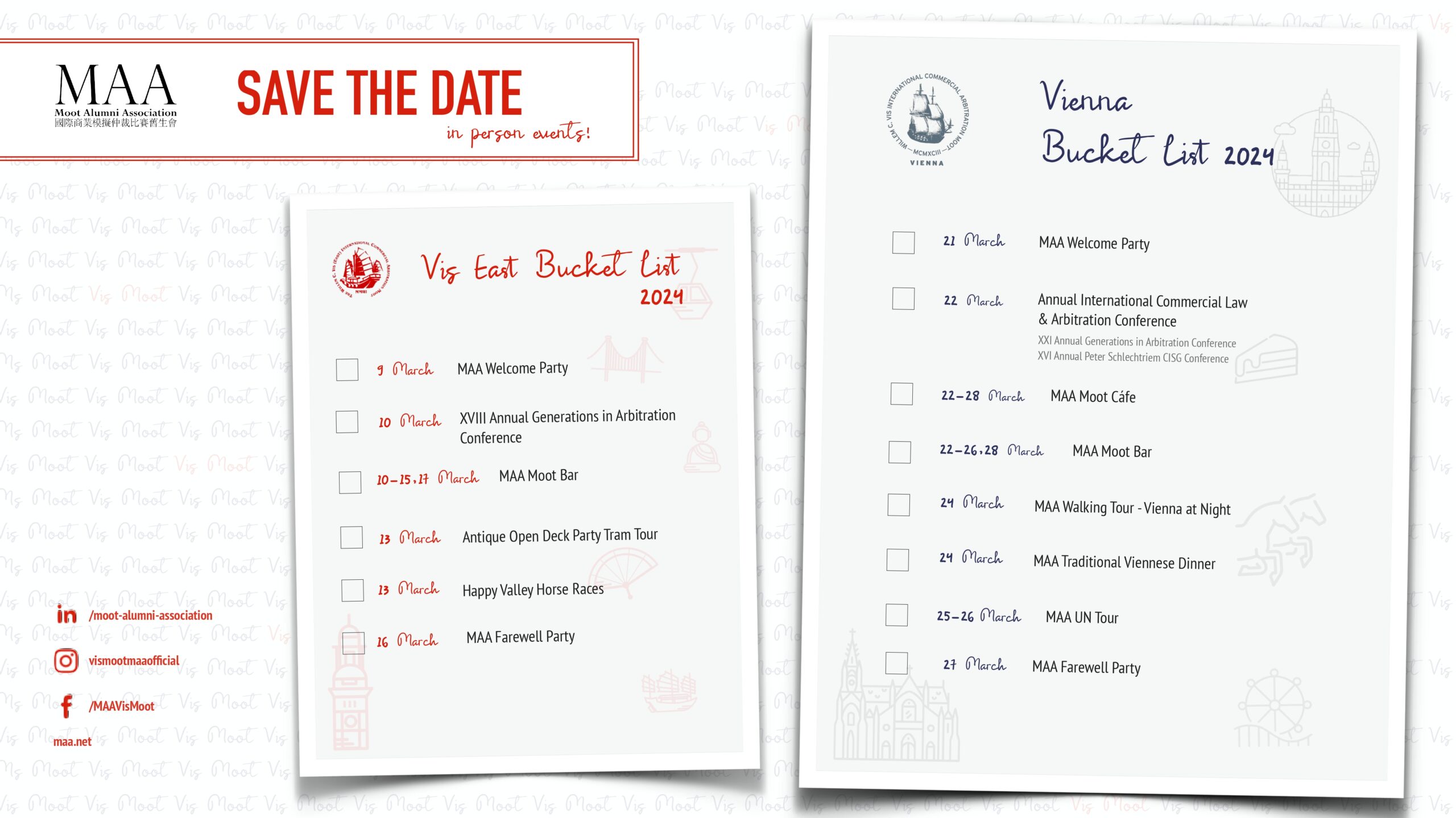
The Vis Moots events calendar is here! Make sure you don’t miss anything!
Professional networking opportunities and personal friendships that form during the Vis Moot Oral Arguments are some of the most important benefits of the Vis Moot Competitions. This is why the MAA is ecstatic to announce our program of in-person events during the Vis East and Vis Vienna Oral Argument Weeks!
As we get close to the 21st Vis East and 31st Vis Vienna, we take this opportunity to draw your attention to the various in-person social and professional networking events in Hong Kong for the Vis East (from 9 to 17 March 2024) and Vienna (from 21 to 28 March 2024). Make sure to check off the many exciting items on your Vis East and Vis Vienna bucket lists – the legendary Moot Bar, the Happy Valley Horse Races, UN Tours and much more.
Further details regarding the events and how to register will soon be available on the MAA Website and our social media channels.
You can choose to be a Premium MAA Member and have priority and discounted access to these events and much more! Sign up here.
Should you have any questions, please don’t hesitate to contact us at [email protected]
Gallery



Official pages of the Vis Moot and Vis East Moot.
Donate to the MAA.



Follow Us: